Tag: Cyber Law

Can we have TRUST on โ€œtrustedโ€ partners? 2025 Womenโ€™s day speaks a different story by Dr.Debarati Halder

Image courtesy : Dr.Debarati Halder

DOI: 10.13140/RG.2.2.19930.04802

Internet is indeed a vast ocean of knowledge now which brings authentic news, bad news, sad news and fake news all at once from trusted, not so trusted and not trusted sources. After artificial intelligence and machine intelligence have taken over the responsibility of mapping and bridging minds for fostering human relationships for networking, to dating to commercial partnership purposes, we got to see heavy volume of breach of TRUST from trusted partners. Indeed, this has given rise to numbers of cybercrimes and women and children are worst affected.

My this monthโ€™s case study therefore includes the unfortunate โ€œbreach of trustโ€ case of a European woman in India by her Instagram male friend in the early weeks of March, 2025. News reports suggested that while the whole world was busy discussing about โ€œFor ALL Women and Girls: Rights. Equality. Empowermentโ€ for UN womenโ€™s day, and womenโ€™s right month, a British woman complained to a local Delhi police station about alleged rape by a man who asked her to come to Delhi for a meet. While the case would have been primarily focusing on physical rape that is addressed by S.63 (rape) and 64 (punishment for rape), Indian laws, especially Information Technology Act, 2000(amended in 2008) still do not have specific law to address communication for the purpose of committing sexual offences in physical space.

What kind of online offence is created in this case?

A brief over view of the newspaper reports may suggest that the communication between the accused and the victim did not elevate to the scale of offensive speech. The victim met the man over social media platform, traveled to India as a tourist and wanted to meet the โ€˜friendโ€™. The latter  rejected the offer to meet her in the place where she was staying and asked her to come to place where he was staying. The communication between them could have been a normal one between two consenting adults and this may not attract the attention of the investigating officers unless the communication may suggest that the man was impersonating someone or it was sexually explicit or obscene that is restricted as per Indian legal understanding under S.67A and 67 of the Information Technology Act, 2000(amended in 2008). But as it is said โ€œbeauty lies in the eyes of the beholderโ€, whether the language is considered offensive and when it turned into for the victim, who was probably consensually reciprocating, needs to be established by prosecution to give the entire case an additional profile of online crime too.

Consensual communication and victim blame game:

Interestingly on 17th October, 2025, Information Technology Act, 2000 will be celebrating 25th year of existence. And in these 25 years we have come to understand that the concept of content based cybercrimes basically emphasizes one major tool: language of the communication. It can be deceptive, threatening, insulting, harassing. it can be expressed in end numbers of ways including pictograms, digital graffiti and any legible textual communication mode.  Given this understanding, legal debates are also shifting towards consensual acceptance of the offer โ€˜to acceptโ€™ the relationship by the recipient. Indeed, the burden of proof now falls on the victim to establish that the communicator was impersonating, playing fraudulent cards or was in a relationship with the victim in order to pass on threatening, harassing communication to her. It is majorly for this reason that most of the victims start feeling guilty and avoid going to the police fearing victim blame game.

But not to forget, State plays the role of victim too and hence โ€˜victim blame gameโ€™ may definitely backfire on the investigators and the prosecutors if proper access to justice and assistance for the direct victim is denied in the name of blame game.

 A key player in this is indeed the intermediary. For long, the intermediaries have adopted the practice of due diligence for escaping the liability of knowingly hosting such faulty communicator and the communication that may be falling outside the scope of protected speech. Indian laws have also provided the protection for the intermediaries under S.79 of the Information Technology Act, 2000(amended in 2008), which addresses exemption from liability of intermediary in certain cases. The exemption clauses were further clarified by Information Technology (Intermediaries guidelines) Rules, 2011.

The trust:

Now comes the question of โ€œtrustedโ€ friend. Again, the accused may be wrapped up in criminal liabilities if he was impostering as internet Romeo. But if he had used genuine information for building up a trusted relationship with an adult โ€˜awareโ€™ and empowered woman, he may not be considered an offender under provisions like S.66C (addressing identity theft and punishment for the same), 66D(cheating by personation and punishment for the same  ) of the Information Technology Act2000(amended in 2008). Neither he may be apprehended under S.319 of Bharatiya Nyaya Sanhita (cheating by impersonation). The victim therefore will be left with laws addressing physical rape only subject to the consequences of investigations on the records of communication. Trust therefore will be considered a mere emotional factor here which is broken because of lack of anticipation of the behavior of the โ€˜instagram friendโ€™.

But then if the victim can prove that she had a โ€˜consensualโ€™ communication and the trust (and consent) was built up on misconception of fact (as S.28 of the Bharatiya Nyay Sanhita explains for clarifying what is NOT a GENUINE consent), the accused can further be wrapped with charges under Sections 66C and D of the Information Technology Act and 319 of the Bharatiya Nyaya Sanhita.

Indeed, this becomes a tedious work for the investigating officer and the prosecutor as they need to establish the behavior of the accused, past criminal and institutional records and intention for networking with women through cyber space.

What can be the best forum?

The reports suggested that the victim lodged the complaint with a local police station in Delhi. Interestingly this could have included a triangle of โ€˜forum shoppingโ€™ if this was limited only with online crime: victim is from UK, defendant is from India, their profiles and communication were facilitated on intermediary which follows US rules. One arm of this triangle will be automatically vanishing since the intermediary may be taking the protective shield of due diligence laws.

  But not to forget, the offence of physical sexual violence on the victim from another jurisdiction has happened in Delhi, India. Defendant is apparently a resident of Delhi and the place of occurrence is also Delhi.  Therefore, trial courts in Delhi can take the matter for consideration for punishing the accused if proven guilty. The victim however needs to be satisfied with the offer of legal and medical aid and either apology and compensation (if decided by the court that may be extracted from the fine), or a judicial assurance of prevention of repetition of the crime as long as the accused (and if convicted) /convicted is under lawful detention.

But we did see revenge-gratification in such cases. The court can extend the preventive order against the accused (even if he somehow manages to get bail while bail is generally not a rule for rape cases).

Let March be the month for renewal of our faith to equality, equal right to access to justice and respect for women as human beings.

Please note: Please do not violate the copyright of this post. Please cite it as Halder Debarati (March 16, 2025). Can we have TRUST on โ€œtrustedโ€ partners? 2025 Womenโ€™s day speaks a different story. Published in https://internetlegalstudies.com/2025/03/16/can-we-have-trust-on-trusted-partners-2025-womens-day-speaks-a-different-story-by-dr-debarati-halder/

ChatGPT : a new legal challenge? by Dr.Debarati Halder

Since November 2022, several stakeholders including those in the education sector have been widely discussing about the new Artificial intelligence based  chatbot ChatGPT.[1] Not so long ago we got to see few AI based human assistance apps Alexa and Siri. These were also connected with internet of things. They answered many questions, guided clients for accessing information of any type and generated any cyber security and data privacy issues. In the legal profession we got to see possibilities of AI based judges. Many lawyers and human-right activists were strongly against this while some actually felt triumphant thinking that AI based judicial work will be accurate and would be giving needed justice to the parties. ChatGPT has created new sensation: not only because it is solving test series[2], but also there are possibilities of probable clash with copyrights of many contents. 

As many resources on ChatGPT had suggested, it works on human fed information and attempts to answers put up before it. There are few implications for this:

  1. For academic evaluations, the chatbot is fed the information and probable assessment questions. The success depends on how accurately and how quickly the AI system matches the correct answers.
  2. Students may misuse the system and possibilities of wide range copyright violation cannot be overruled.
  3. The chatbot is fed about probable legal issues and the nearest legal solutions for the same. The scope of said legal solutions may be expanded by accessing several other contents available on the internet. This may actually make the chatbot more accurate than an attorney farm or a practitioner whose research team may need several days to prepare the brief to support the client. In short, , human emotional intelligence may be lacking while counselling clients, especially in cases of private injuries.
  4. The chatbot interacts with human beings for assistance. Even though the makers of the chatbot claims that it has better data security, at present all AI based human assistance apps are questionable for providing data privacy and security. There is no guarantee that the personal data including sensitive personal data will be protected.

ChatGPT is heavily supported by LargeLanguage Model (LLM) model tools and this may necessarily have a third-party moderator of the information/data. Within four months of its inception, usage of ChatGPT has become questionable from all sectors including the legal sector: consider this thought provoking article on digital literacy training of the judiciary touching upon the usage of ChatGPT in delivering judgements in the USA[3]: Gutiรฉrre raises question on probable errors in the judgement as judges may not know to check the authenticity of the  information received from ChatGPT. Gutiรฉrre suggests for development of a policy to use the AI based human assistance tools for legal professionals and I completely agree with the same.

Let us not forget that emotional intelligence plays havoc in providing healing touch for cases falling in the category of personal injury. Chatbots or any other robot legal researcher would not be able to map and match the emotional injury with physical injury and quantity of damages and compensation. Similarly an assessment designed to evaluate the positive learning process of a student can not achieved properly if the AI based assistance tools are used without any proper guidelines. It is time that we humans tame our machine intelligence  by setting certain guidelines first. Otherwise the precious human intelligence for creating artificial intelligence will be used only for destruction and overpowering the good by evil intentions.


[1] For more understanding, see https://openai.com/blog/chatgpt/ Accessed on 21.02.2023

[2] See Rosen Kalhan (2023) . ChatGPT passes MBA exam given by a Wharton professor. Published in https://www.nbcnews.com/tech/tech-news/chatgpt-passes-mba-exam-wharton-professor-rcna67036 on 24-01-2023. Accessed on 25-01-2023

[3] Juan David Gutiรฉrrez(2023) ChatGPT in Colombian Courts:

Why we need to have a conversation about the digital literacy of the judiciary. Published in https://verfassungsblog.de/colombian-chatgpt/?fbclid=IwAR3X2r9vVJH5HeYcGf_O4cBNoKae4_TouFLH36TOJqZ1B954NTqLFnrgFug on 23-02-2023 . Accessed on 23-02-2023

What is meant by “Website”? by Dr.Debarati Halder

We are in 2022 and the pandemic has not left us yet. News channels are tirelessly sharing updates on surging cases, further closure orders for schools, virtual hearing of the courts etc. Where are we sharing the information? From where are we getting some information? It is โ€œwebsitesโ€. There are millions of websites hosted and also managed by different stakeholders who share different information on WorldWideWeb. Strangely, we do not find the definition of the term website in majority of legal documents but when we see from the perspective of cybercrimes, we cannot avoid the role of websites as websites provide a platform for sharing contents which may be offensive.

The term website is connected with the concept of world wide web which was invented in 1989  by British scientist Tim Barnes Lee who worked on Interlinking of webpage and websites as a scientist with European organization for  nuclear research (CERN). Leeโ€™s work led to connect creation of worldwide web to attributing ip address, domain names, .ccreation of hypertext markup language , uniform resource locator (URL) etc. The major reason behind creating the web was to facilitate the demands of information sharing between the government stakeholders including the military, scientists in the universities and other institutes all over the world for the purpose of information sharing, gathering and strengthening national security including cyber security infrastructure and military intelligentsia. However, very soon in the millennium tech companies started appearing to create, host, maintain etc., of websites which were interactive, passive or hybrid types of websites and which could be used for either e-commerce purposes, or for interaction, peer to peer networking and information sharing or for all. At this juncture it became necessary to explain the term โ€œwebsiteโ€. Even though, we do not get to see any uniform definition of the term in specific legal documents, the term has been attempted to be defined by different stakeholders. It may be broadly explained as collection of hyperlinked pages over the web and related contents which may be identified by common domain name and which may get published on world wide web by some web server.

Now we are dependent completely on different kinds of websites and we manage our homes and offices through these websites. Presently we get to see many legal persons, i.e., companies which may create their own websites which may be used mainly for information sharing, e-commerce purposes and interacting with people. There are different technology companies like Meta (earlier known as Facebook), specifically created for sponsoring, creating, maintaining websites and webpages who also collect data of the users/subscribers/.  We have heard a lot about liability of the websites. But websites in general are inanimate. They become legal persons only when they are operated by people who may create websites, connect to web pages, get a domain name for the websites, publish contents and facilitate peer to peer networking and/or share information as a passive website. Liability of the websites therefore depend on their activities that are decided by the creators/administrators/distributors/users of the websites.

Intermediary and Website are not the same: Even though there are several laws and policy guidelines have been made worldwide to consider liabilities of the websites including The Information Technology (Intermediary Guidelines and Digital Media Ethics Code) Rules 2021, we have not yet seen the proper definition of website.  Even though S.2w of the Information Technology Act, 2000(amended in 2008) defines the term intermediary as โ€œany person who on behalf of another person receives, stores or transmits that record or provides any service with respect to that record and includes telecom service providers, web-housing service providers, search engines, online payment sites, online auction sites, online market places and cyber cafesโ€, the same should not be confused with the term โ€˜websiteโ€™. An intermediary however can create, maintain a website.

Please note: Pleaseย  do not violate the copyright of this writeup. Please site it as Halder Debarati (2022) What is a website? Published in https://internetlegalstudies.com/2022/01/03/what-is-meant-by-website-by-dr-debarati-halder/ย on 03-01-2022

Gender and Internet : Web magazine for Cyber law for women News update for September 20- October 24, 2021

Image courtesy : Internet

Facebook targeted for not sharing expected transparency reports on policy measures for cyber safety of users inlcuding women and children
https://www.fox5ny.com/news/facebook-oversight-board-criticizes-company-for-not-being-fully-forthcoming

The first female governor of NewYork signs Bills into legislation for preventing cyber bullying and measuring impact of cyber bullying.
https://www.governor.ny.gov/news/governor-hochul-signs-online-safety-package-legislation

Japanese man uses AI to create deep fake contents by reconstructing blurred parts especially private parts and sells the contents online. Japanese police claims to have arrested and charged the man for violating obscenity laws.
https://www.vice.com/en/article/xgdq87/deepfakes-japan-arrest-japanese-porn

Edinburgh court takes up matter for trial of man accused of terror offences who is found to have stored images of sexual activities with mutilated bodies of women
https://www.thenational.scot/news/19655198.glenrothes-terror-suspect-dead-girl-pics-folder-computer-edinburgh-court-hears/

Frederick county grand jury in the US six men including one who is accused of raping woman, possessing child pornography materials.
https://www.fredericknewspost.com/news/crime_and_justice/frederick-county-grand-jury-indicts-defendants-for-rape-arson-burglary/article_d4be30ca-d36a-5cae-bcf1-ac08c279147e.html

Smart toilets pose more threat to privacy for men and women now.
https://www.theguardian.com/lifeandstyle/2021/sep/23/the-smart-toilet-era-is-here-are-you-ready-to-share-your-analprint-with-big-tech?fbclid=IwAR1_nUbHSP6mNiuAdKtrT9cQDU9mTVNMPEaRKK-q_-r20pjC8W0wwOtt6eY

Gender and Internet : Web magazine for Cyber law for women News update for January 27th-February 9, 2020

In a first, Madras High Court refuses to quash a case against Airtel as a service provider and directs the trial court to conduct trial for finding out liability of the service provider for continuous sending of unwanted messages of sexual nature to an Airtel subscriber.
https://timesofindia.indiatimes.com/city/chennai/obscene-messages-airtel-to-face-trial-as-hc-refuses-to-quash-case/articleshow/73944935.cms

Basildon Crown Court, UK awards 32 months jail sentence to man who hacked into iCloud and leaked private images of women and girls online. The prison sentence is awarded in relation to 12 computer misuse offences, nine counts of voyeurism and five counts of taking indecent images of children.
https://digit.fyi/suffolk-man-jailed-for-hacking-icloud-and-sharing-indecent-images-online/

Saudi divorced woman arrested for ‘indecent’ posts on social media which includes encouraging women to leave their husband when certain demands are not fulfilled, hosting matchmaking, showcasing women dancing and smoking in public. The activities have been considered as criminal activities as per Saudi laws.
https://stepfeed.com/saudi-woman-arrested-for-posting-illicit-content-on-snapchat-8974

Two men from a reputed family in West Bengal target 182 women by way of stalking, hacking, voyeurism etc. Police arrests the offenders under several provisions of Indian Penal Code, Information Technology Act
https://news.abplive.com/tv-show/sansani/kolkata-men-arrested-for-blackmailing-182-women-sansani-1155439


Woman CEO receives constant vulgar messages from fake email ids. Accused arrested for cyber stalking in India
https://www.deccanchronicle.com/nation/current-affairs/080220/saree-designer-cyberstalks-woman-ceo-arrested.html

Gender and Internet : Web magazine for Cyber law for women News update for October 20th-31st, 2019

WhatsApp sues Israeli firm accusing of hacking phones of activists. Several women, who were already victims of online violence including rape threats, online misogyny etc, are also affected
https://www.theguardian.com/technology/2019/oct/29/whatsapp-sues-israeli-firm-accusing-it-of-hacking-activists-phones

Katie Hill, the U.S. Representative becomes victim of online exploitation and non consensual porn. Hill’s private images with a staffer get leaked infringing her privacy.
https://news.yahoo.com/kamala-harris-defended-representative-katie-143000147.html

Fake dating site which was victimizing men, was found to be engaging women for alluring men for the site. These women were promised high financial rewards if they could allure men and trick them into depositing money to meet women as proposed through fake profiles.
https://www.yovizag.com/vizag-cybercrime-police-fake-dating-website-case/

Woman crew brings law suits against two US pilots for allegedly committed voyeurism in 2017 by placing hidden camera in the lavatory of the flight. The images were streamed in the cockpit
https://www.ndtv.com/world-news/southwest-airlines-pilots-allegedly-hid-camera-in-toilet-then-streamed-video-to-the-cockpit-2123450?fbclid=IwAR2JU5Y50YIxsCJ8ok4cIUR9ZK6K2631nDHkQgApluUQO3OmYoS63trdcCI

Australian law makers follow UK to use Facial Recognition tool to prevent children from accessing porn contents.
https://arstechnica.com/tech-policy/2019/10/australia-wants-to-use-face-recognition-for-porn-age-verification/?fbclid=IwAR0vXJk_4h3k8a3E01jJ8repCwM0Gd_HaSkvw-8ogHAV0JAg2bIxqMuXCsY

Porn Hub, one of world’s biggest porn sites is being flooded by voyeur, non consensual porn images of women and girls that are captured using hidden cameras. Site users are using keywords such ‘hidden camera’ to access more voyeur and non consensual porn contents
https://jezebel.com/hidden-camera-clips-popped-up-on-pornhub-and-the-proble-1839414523?utm_medium=sharefromsite&fbclid=IwAR1lGgFZDmginVuP9jIwxWOp4RR8NHp_pmKqiCSuX-wUsOPdrwCuSEskuII

3 ways how Artificial Intelligence may make women land in trouble by Dr.Debarati Halder

Image curtsy : Google

Information communication technology and digital communication technology have opened up new vistas for human relationships. The innovative technology with the help of Artificial Intelligence (AI) can now read minds,[1] predict illness,[2] predict crime occurrence,[3] enhance the professional and social network, and help in better analytical understanding of subjects. But it can also leave devastating impacts on human life. It can alter the data (including personal data), harm social reputation and can even instigate victims to take extreme steps like committing suicide.[4] All these may be done by positive and negative usageย  ย of artificial intelligence which plays the base role for empowering Apps which in turn may be used for positive and negative usages. ย Artificial Intelligence (AI) has been used by web companies like Facebook for facial recognition of users earlier. AI has also been used for companies (other than web companies) for processing employee data. In short, AI has been used to access private information of individuals either consensually or without consent. Here are three ways as how AI may create an uncomfortable situation for women specifically in India :

  1. Facial Recognition Apps and harassment of women: Remember the time when Facebook suddenly started asking for nude photos individuals for upgrading their own safety system apparently for providing safety mechanisms for subscribers?[5] This project was intended to build up a safety mechanism against revenge porn with the help of Artificial Intelligence. Facebook wanted to empower their subscribers, especially women to report revenge porn. But before that, the company wanted to ensure that the revenge porn content showcased the image that belonged to the victim specifically. The facial recognition app, the skin texture, hair color, biometric recognition technology would be matching both the images (the nude picture of the victim and the revenge porn content created by the perpetrator) and would be identifying the revenge porn content as illegal. But this project received stern objections because there were more possibilities of misuse of nude photos than positive use of the same. Facebook -Cambridge analytica case did prove that nothing is impossible when it comes to preservation of data by body-corporates and data of individuals is always profitable and the security of the  same is vulnerable. But this may not seem to be as dangerous as misuse of Face App may seem to be . FaceApp is basically used to change the face structure of the person whose photograph would be used in this App. It can change the texture of the skin and density of hair including facial hair.  In July, 2019, FaceApp became the center of concern for Indian cyber security stakeholders especially when several celebrities started using FaceApp and started showcasing their changed faces on Instagram.   While FaceApp was basically being used for fun purposes, it may also throw challenges for data safety and security of person concerned. FaceApp helps to change the structure of faces. But we should not forget that the altered facial image can be saved in devices and cloud of different individuals. This altered image may be used for several illegal activities. Predators may unauthorizedly access the social media profiles and change facial images of the victims to create fake profiles; they may also use such images to create a completely new impersonating profile to harass women. Altered facial images of women may also be used for revenge purposes especially when the victim is looking for opportunities in the entertainment or advertisement sector where her appearance may be considered as her biggest asset. Apart from this, FaceApp may be used to attract bullies and trolls to intensify victimization of women.
  2. Bringing back the memory: No one, but the web companies clearly remember what we posted in last summer. Every day social media companies would show what was posted by the user a year back or a couple of years back and would gently remind the user that he/she can share the said post as a memory. How does it happen? The web companies look for algorithm and the highest likes and comments for posts on daily or even hourly basis. When the posts earn more likes and comments, the AI decides to bring it forth. In certain situations, such refreshing of memories might not be โ€˜wantedโ€™ at all especially when the victim might had a bitter ending of the relationship with persons in the said image or the text in question may no longer evoke good memories, but rather traumatize the victim more. But machine intelligence does not fail the company: it is a matter of consent and choice after all. But consider if the account is unauthorizedly accessed: the hacker may get to know something from the past which the victim may never wanted the hacker to know.
  3. Reminding the user about best low prices : AI runs over the internet like blood vessels carrying oxygen all over the body. When a user decides to compare prices of any product or services, AI helps to share the same almost always on any platform the user would be visiting. It might be extremely embarrassing for any woman if such searches start showing results when she is surfing the social media or even the search engine with a friend or another individual. Nothing is left by the AI from prices of lipsticks, hotels at cheaper rate, flight details to last watched videos on how to conceive. This might also make women face discrimination, office bullying and harassment due to several reasons.

These are but some of the many ways as how AI may make women to land in trouble. AI is necessarily connected with data privacy protection policies of web companies. The EU General Data Protection Regulation, 2018 provides that personal data may not be processed without the consent of the owner of the data.[6] But in this case, there can be legal tangles as web companies may  claim that they do not breach the data confidentiality or transfer the data to any other jurisdiction, neither they process the data without proper authorization. Here, multiple stakeholders may be involved which may include the original owner of the content or the picture which may have been processed for the purpose of harassment : the perpetrator, who may have carried out changes on the data using the AI supported Apps, perpetrators who may have unauthorizedly  stored the altered contents, picture or information or may have used the altered information, picture for creating impersonating profile etc. As per Indian legal understanding, altering, modifying etc of contents/ information/ image /images without proper authorization of the original owner of the  information etc may attract penal provisions under the Information Technology Act, 2000 (amended in 2008): these provisions may include Ss 43 (Penalty and compensation for damage to computer, computer system etc, ), 66 (computer related offences, 66C (punishment for identity theft) and 66D (punishment by cheating by personation by using computer resource etc. This may also attract penal provisions for Copy Right violation as well. Further, the web companies may be narrowly be liable for protecting data properly under several provisions including S.43A which speaks about body corporates liability to protect data. But irrespective of existing provisions, web companies may always escape the clutches of law due to due diligence clause and on the question of consent expressly or impliedly provided by the woman victim concerned. In the EU, courts are becoming more and more concerned about policy violations by web companies to fool the users. In India too, the courts must throw light on the web companies responsibility as data repository. Regulations like Data protection Bill, 2018 must be considered with utmost care. These may have the key to solve problems of online victimization of women.

Also, women users need to be extremely cautious about machine intelligence. Awareness must be spread about how the hidden โ€˜safety valvesโ€™ of the web companies (which may actually make the web companies more powerful against claims of lack of due diligence) may be used properly. ย 

Please note: This blog was first published in
https://debaraticyberspace.blogspot.com/2019/09/3-ways-how-artificial-intelligence-may.html Please note: This blog was first published in


[1] For example, see Nosta John (2019) A.I. Can Now Read Your Thoughtsโ€”And Turn Them Into Words and Images. Published @ https://fortune.com/2019/05/07/artificial-intelligence-mind-reading-technology/ on May 7, 2019

[2] For example, see PTI (2019), These AI tools can predict early death risk due to chronic diseases

Published @//economictimes.indiatimes.com/articleshow/68611835.cms?from=mdr&utm_source=contentofinterest&utm_medium=text&utm_campaign=cppst on March 28, 2019

[3] Dearden Lizzi (2017) How technology is allowing police to predict where and when crime will happen. Published @ https://www.independent.co.uk/news/uk/home-news/police-big-data-technology-predict-crime-hotspot-mapping-rusi-report-research-minority-report-a7963706.html?fbclid=IwAR334Z4-1KlkK5Xrt_R6IUaU7K35bANkPLc3RAUhHUeEf-eerZseEJbSofo on October 7, 2017

[4] Halder D., & Jaishankar, K (2016.) Cyber crimes against women in India.

New Delhi: SAGE Publications. ISBN: 9789385985775

[5] See for example Solon Olivia (2017) Facebook asks users for nude photos in project to combat ‘revenge porn’. Published in https://www.theguardian.com/technology/2017/nov/07/facebook-revenge-porn-nude-photos  on November 7, 2017

[6] For more, see S.7 of the EU GDPR . URL: https://gdpr-info.eu/art-7-gdpr/ Accessed on 17-08-2019

Gender and internet : Cyber law magazine for women News update 1st -20th August, 2019

Israeli Man who harassed underage girls and young women by impersonating as gynecologist, swimming coach etc on internet to groom them only to do sextortion later, tries to escape clutches of law by faking mental illness. Psychological tests prove that he was doing online harassment in a very organised manner. Prosecutors asked the court to put him in custody unless proper legal recourse is decided. https://www.timesofisrael.com/israeli-indicted-for-sexual-abuse-of-45-underage-girls/

Man targets women staff and female HR officials with lewd messages in India, gets arrested http://www.millenniumpost.in/delhi/man-booked-for-sending-obscene-texts-367832

Law fails to deter conman : Man dupes many women on Facebook promising marriage http://www.newindianexpress.com/cities/bengaluru/2019/aug/07/man-held-for-cheating-women-on-social-media-2015312.html

Messaging apps being misused to impersonate and send lewd messages to women in India https://www.freepressjournal.in/mumbai/aurangabad-women-approach-police-after-getting-lewd-messages

Dubai police warns beach-goers regarding taking pictures of women without their consent : jail term or hefty fines await law breakers https://www.thenational.ae/uae/government/snap-with-caution-dubai-police-issue-new-warning-to-beachgoers-1.894327

Bitcoin sextortion scamming cases reaches record high https://www.cryptoglobe.com/latest/2019/08/bitcoin-sextortion-scammers-stole-1-2-million-in-bitcoin-last-year/

Female researcher of Makerere University becomes the first person to be convicted under the Computer Misuse Act for offensive communication targeting President Yoweri Museveniof Uganda after she expressed her dissatisfaction when she was acquitted of charges for offensive communication. Apparently, Nyanzi, the researcher has been protesting against abuse of presidential power. https://observer.ug/news/headlines/61520-stella-nyanzi-found-guilty-of-cyber-harassment

Mamata Banerjee, Priyanka Chopra and Aishwarya Rai : What bonds them together and why?

On 14-05-2019 the Supreme Court of India created one more example of broadening the freedom of speech when it ordered for the immediate release of Priaynkaย  Sharma, a BJP activist. Sharma had allegedly posted a meme of Mamta Banerjee which contained morphedย  picture of Mamata Banerjee on Priayanka Chopraโ€™s image thatย  was taken in Met Gala, 2019. Chopra was heavily trolled for her attire and make-up and several people started created memes with Chopraโ€™s picture.ย  The Supreme Court on an appeal by the brother of Sharma ordered for an immediate release of Sharma (who was arrested by the West Bengal police) emphasizing the fact that she should apologies to Banerjee because it has hurt her. The court also mentioned that freedom of speech cannot be unfettered when it infringes otherโ€™s right.[1] ย As per the news reports, she was however released after 24 hours.

This is not the first time in India that someone got arrested for โ€˜postingโ€™ images/comments etc ย on social media which apparently questions/defames/teases political personalities including members of the ruling governmentย  party. After the coming into effect of the amended version ofย  Information technology Act, 2000 (amended in 2008), S.66A (which prescribed punishment for offensive, annoying etc. speech) has been over and again used by the police to arrest individuals who had posted comments which apparently questioned/ridiculed/defamed/teased political personalities. Before S.66A could have been properly interpreted, [2] the Supreme Court felt that the provision was being grossly misused for the ill drafting and in Shreya Singhal vs Union of India, the apex court ruled it unconstitutional.ย  In the recent Mamata Banerjee meme case, Supreme court stuck to its earlier understanding that no arbitrary arrest may be made for posting contents on social media targeting particular political personalities (including those in the ruling government parties) because this hampers freedom of speech.ย  Let me also state here that Banerjee has sister -politician who had been โ€˜victimsโ€™ of memes : she is none other than German chancellor Angela Merkel whoseย  latest memes appeared with Narendra Modiย  when the BJP official website got hacked.ย  There is rarely any information available whether Merkel had made the police arrest the individuals who had been creating or sharing the memes including the morphed images of Merkel. ย 

My concern here however does not cover the repetition of the act of Mamata Banerjee government in arresting individuals targeting political personalities including herself.  I look at the issue from two perspectives here: (i) morphing the image of a woman and thereby creating/distributing/sharing the same as a non-consensual image (and not nonconsensual pornography); (ii) who should be ideally liable and under which law, and whether this issue attracts any legal liablity or not.  As the reports and the  image in question (which is still available when we search with key words such Mamata Banerjee meme ) suggests , it was not one, but two women were targeted : Priyanka Chopra, the original person in the image, who was heavily trolled because of her Met Gala, 2019  attire  and Mamata Banerjee, whose  face was morphed with the picture of Priyanka Chopra . Priyanka Chopra has not yet filed any police complaint for trolling; neither she has filed any complaint for morphing her picture.  It was not the same case for Banerjee:  she made it sure that the individual who shared the image should get arrested  under several provisions of Information Technology Act, 2000 (amended in 2008) including S.500 of the Indian Penal Code which prescribes punishment for defamation. The news reports however did not mention about the specific provisions of IT Act under which she was arrested. Noticeably, neither Information Technology Act, nor Indian Penal Code recognizes any offence ofโ€™ โ€˜morphingโ€™. The term does not find any mention in any law. Further, the existing laws neither specifically focuses attention for creation of  morphed image  of women for  damaging her reputation. However, cutting and pasting  of face is holistically addressed under several laws including Indecent Representation of women prevention Act (especially when the content is used to show case women in an indecent manner), S.509 of the IPC (which prescribes punishment for word, gesture, or any act made to insult the modesty of a woman), Ss66D( Punishment for cheating by personation by using computer resource) 66E Punishment for violation of privacy) etc, which may be coupled with Ss.. 67 (Punishment for publishing or transmitting obscene material in electronic form) or 67A ( Punishment for publishing or transmitting of material containing sexually explicit act, etc., in electronic form), (this is especially when the image or related text suggests sexual offences ) or S.354 C IPC (which prescribes punishment for voyeurism targeting women). A minute scrutiny of these provisions may suggest that they may loosely  skirt around the concept of anti-defamation law as well especially when the reputation of the targeted victim is at stake due to the content  created/transmitted .

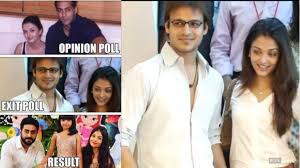
In this political memes targeting women (and ridiculing them), one more celebrity woman Aishwarya Rai now joins with ย Mamata Banerjee and Priyanka Chopra. Rai was featured in a meme created and shared ย by another actor from the film industry who, the media reports suggest, had an emotional bondage with Aishwarya Rai before she got married to her present husband Abhishek Bacchan. Raiโ€™s meme showcases not one , but three ย photos with texts which had been the center of debate and โ€˜amusementโ€™ for many. The first photo shows Rai with Salman Khan, a prominent actor of Bollywood who had a relationship with Rai many years back when she was a debutant in Bollywood. She reportedly came out of the relationship because of physical abuses and harassment. This photo has a caption which reads โ€˜opinion pollโ€™. The next is with Vivek Oberoi, who has allegedly created the meme. This has a caption which reads โ€˜exit pollโ€™ and the last in the line is Raiโ€™s family photo with her husband and daughter, which reads โ€˜resultโ€™. Noticeably, this meme attracted attention of many because this centered around a celebrity woman actor who is supposed to be one of worldโ€™s most beautiful women. She has been trolled many times earlier. But this is probably the first time that she, her husband ย and her minor daughter are pulled in for political meme. Oberoi was slammed by many of his fellow Bollywood women actors who considered this as disgraceful, classless, disgusting etc.[3] While accepting the fact that Rai is a favorite subject for trolls for many years, what no one understood in this was, Raiโ€™s daughter does not deserve this as a child. Even though as a celebrity child, she and her motherย  had been trolled; could anyone understand how her right to privacy and basic child rights have been violated ? Thatโ€™s the curse of being the daughter of a celebrity mother which follows all children of all women celebrities including women actors, politicians, sports persons etc.

As such, both Mamata Bannerjee , Priayanka  Chopra and Aishwarya Rai could have availed any of these laws mentioned above if they were not public figures and if the photographs that had been the major issue here, had been their personal  photographs or it would have been created specifically for sexual gratification which happens to most of the women actors.[4]

Then in that case, if the photographs were their personal properties, could they have pursued the police for arrest?    We have to turn our attention to chapter IV of the Copyright Act, 1957 for this : three sub clauses of S.17 attract my attention here which are as follows:

17. First owner of copyright.โ€” Subject to the provisions of this Act, the author of a work shall be the first

owner of the copyright therein:

Provided thatโ€”

(a) in the case of a literary, dramatic or artistic work made by the author in the course of his

employment by the proprietor of a newspaper, magazine or similar periodical under a contract of

service or apprenticeship, for the purpose of publication in a newspaper, magazine or similar

periodical, the said proprietor shall, in the absence of any agreement to the contrary, be the first

owner of the copyright in the work in so far as the copyright relates to the publication of the work

in any newspaper, magazine or similar periodical, or to the reproduction of the work for the

purpose of its being so published, but in all other respects the author shall be the first owner of the

copyright in the work;

 (b) subject to the provisions of clause (a), in the case of a photograph taken, or a painting or portrait

drawn, or an engraving or a cinematograph film made, for valuable consideration at the instance of

any person, such person shall, in the absence of any agreement to the contrary, be the first owner of

the copyright therein;

(c) in the case of a work made in the course of the authorโ€™s employment under a contract of service or apprenticeship, to which clause (a) or clause (b) does not apply, the employer shall, in the absence of any agreement to the contrary, be the first owner of the copyright therein;

Neither Priyanka Chopra, nor Mamata Banerjee claimed that the photographs in question were their personal photographs which they โ€˜ownedโ€™ as per Copyright Act. The photographs were then properties of different persons or agencies who probably had captured both the women with consent.  Given this fact, neither (especially Banerjee) may proceed to complaint for arresting unless it has harmed her reputation or caused her financial loss or caused grave threat. Here, we must note that the Supreme Court has very narrowly touched upon the private sentiment of  Banerjee when it stated that such production and sharing of photograph may have infringed her right (not any specific right, but understandably it was largely right to reputation under Right to Life with dignity).   But what the court failed to note here was the liability of the website where it was published and shared. Websites like Facebook however may not count this as impersonation (again we have to go back to the understanding as who is โ€˜ownerโ€™ of the photograph) unless the image has been used to grossly defame the person whose photo is involved. The websites would neither recognize this as offensive if seen from the perspective of US laws of Freedom of speech which is extremely broad. This has been the major concern for many women victims of morphing, revenge porn and nonconsensual porn throughout the world.  In India the due diligence clause under S. 79 of the Information Technology Act (exemptions from liability of intermediary in certain cases) had been a major savvier for  US based web companies like Facebook or Twitter when it comes to liability of websites for offences including generating /continuing the harassment of women for nonconsensual photographs.   There is however one more solution from EU : Article 13 of the EU directives on Copyright in the single market[5] which makes the websites liable for illegal hosting of contents if they do not acquire license from the right holders of such contents. This means that the third party liability in offensive and illegal content sharing becomes more stringent as per the EU copyright Law. But in India such laws are not yet implemented or executed.

What we see from the above discussion is, Supreme Court has yet again broadened the meaning of freedom of speech, but failed to provide guidelines which may have strengthened rights of women who may be victimized by way of morphing in general. The court was in a hurry to undo the wrong of a political persona and the police who may have acted under her direction. But failed to create a lasting (and impressive) interpretation of  laws which could have saved millions of women victims of nonconsensual  images.

  • This blog was earlier published in Halder.Debarati (2019)Mamata Banerjee, Priyanka Chopra and Aishwariya Raiย ย : What bonds them together and why. Published inย ย http://debaraticyberspace.blogspot.com

[1] Singh V.P. (2019) Mamta Banerjee Meme: What For Did The SC Ask Priyanka Sharma To Apologise?

https://www.livelaw.in/columns/mamta-banerjee-meme-what-for-did-the-sc-ask-priyanka-sharma-to-apologise-145069 . Published on May 15, 2019

[2] See Mamata Banerjee meme: SC grants bail to BJP worker Priyanka Sharma, asks her to apologise after release. Published in https://www.indiatoday.in/elections/lok-sabha-2019/story/mamata-banerjee-meme-bjp-worker-bail-west-bengal-priyanka-supreme-court-1524467-2019-05-14   on May 14, 2019.

[3] See ET online (2019)Vivek Oberoi tweet Aishwarya Rai’s meme; Sonam Kapoor, Jwala Gutta lash out at actor

Published @//economictimes.indiatimes.com/articleshow/69413084.cms?utm_source=contentofinterest&utm_medium=text&utm_campaign=cppst on May 21, 2019. Accessed on May 21, 2019

[4] Halder D., & Jaishankar K. (2016) Celebrities and Cyber Crimes: An

Analysis of the Victimization of Female Film Stars on the Internet. Temida

– The journal on victimization, human rights and gender. 19(3-4), 355-372.

ISSN: 14506637

[5] See Art 13 in the DIRECTIVE OF THE EUROPEAN PARLIAMENT AND OF THE COUNCIL

on copyright in the Digital Single Market @ https://eur-lex.europa.eu/legal-content/EN/TXT/?uri=CELEX%3A52016PC0593

Mamata Banerjee, Priyanka Chopra and Aishwariya Rai : What bonds them together and why

CYBER CRIME AGAINST WOMEN BY DEBARATI HALDER

On 14-05-2019 the Supreme Court of India created one more example of broadening the freedom of speech when it ordered for the immediate release of Priaynkaย  Sharma, a BJP activist. Sharma had allegedly posted a meme of Mamta Banerjee which contained morphedย  picture of Mamata Banerjee on Priayanka Chopraโ€™s image thatย  was taken in Met Gala, 2019. Chopra was heavily trolled for her attire and make-up and several people started created memes with Chopraโ€™s picture.ย  The Supreme Court on an appeal by the brother of Sharma ordered for an immediate release of Sharma (who was arrested by the West Bengal police) emphasizing the fact that she should apologies to Banerjee because it has hurt her. The court also mentioned that freedom of speech cannot be unfettered when it infringes otherโ€™s right.[1]ย As per the news reports, she was however released after 24 hours.
This is not the first time in India that someone got arrested for โ€˜postingโ€™ images/comments etc ย on social media which apparently questions/defames/teases political personalities including members of the ruling governmentย  party. After the coming into effect of the amended version ofย  Information technology Act, 2000 (amended in 2008), S.66A (which prescribed punishment for offensive, annoying etc. speech) has been over and again used by the police to arrest individuals who had posted comments which apparently questioned/ridiculed/defamed/teased political personalities. Before S.66A could have been properly interpreted, [2]the Supreme Court felt that the provision was being grossly misused for the ill drafting and in Shreya Singhal vs Union of India, the apex court ruled it unconstitutional.ย  In the recent Mamata Banerjee meme case, Supreme court stuck to its earlier understanding that no arbitrary arrest may be made for posting contents on social media targeting particular political personalities (including those in the ruling government parties) because this hampers freedom of speech.ย  Let me also state here that Banerjee has sister -politician who had been โ€˜victimsโ€™ of memes : she is none other than German chancellor Angela Merkel whoseย  latest memes appeared with Narendra Modiย  when the BJP official website got hacked.ย  There is rarely any information available whether Merkel had made the police arrest the individuals who had been creating or sharing the memes including the morphed images of Merkel. ย 
My concern here however does not cover the repetition of the act of Mamata Banerjee government in arresting individuals targeting political personalities including herself.ย  I look at the issue from two perspectives here: (i) morphing the image of a woman and thereby creating/distributing/sharing the same as a non-consensual image (and not nonconsensual pornography); (ii) who should be ideally liable and under which law, and whether this issue attracts any legal liablity or not.ย  As the reports and theย  image in question (which is still available when we search with key words such Mamata Banerjee meme ) suggests , it was not one, but two women were targeted : Priyanka Chopra, the original person in the image, who was heavily trolled because of her Met Gala, 2019ย  attireย  and Mamata Banerjee, whoseย  face was morphed with the picture of Priyanka Chopra . Priyanka Chopra has not yet filed any police complaint for trolling; neither she has filed any complaint for morphing her picture. ย It was not the same case for Banerjee: ย she made it sure that the individual who shared the image should get arrestedย  under several provisions of Information Technology Act, 2000 (amended in 2008) including S.500 of the Indian Penal Code which prescribes punishment for defamation. The news reports however did not mention about the specific provisions of IT Act under which she was arrested. Noticeably, neither Information Technology Act, nor Indian Penal Code recognizes any offence ofโ€™ โ€˜morphingโ€™. The term does not find any mention in any law. Further, the existing laws neither specifically focuses attention for creation ofย  morphed imageย  of women forย  damaging her reputation. However, cutting and pastingย  of face is holistically addressed under several laws including Indecent Representation of women prevention Act (especially when the content is used to show case women in an indecent manner), S.509 of the IPC (which prescribes punishment for word, gesture, or any act made to insult the modesty of a woman), Ss66D( Punishment for cheating by personation by using computer resource) 66E Punishment for violation of privacy) etc, which may be coupled with Ss..67 (Punishment for publishing or transmitting obscene material in electronic form) or 67A ( Punishment for publishing or transmitting of material containing sexually explicit act, etc., in electronic form), (this is especially when the image or related text suggests sexual offences ) or S.354 C IPC (which prescribes punishment for voyeurism targeting women). A minute scrutiny of these provisions may suggest that they may looselyย  skirt around the concept of anti-defamation law as well especially when the reputation of the targeted victim is at stake due to the contentย  created/transmitted .
In this political memes targeting women (and ridiculing them), one more celebrity woman Aishwarya Rai now joins with ย Mamata Banerjee and Priyanka Chopra. Rai was featured in a meme created and shared ย by another actor from the film industry who, the media reports suggest, had an emotional bondage with Aishwarya Rai before she got married to her present husband Abhishek Bacchan. Raiโ€™s meme showcases not one , but three ย photos with texts which had been the center of debate and โ€˜amusementโ€™ for many. The first photo shows Rai with Salman Khan, a prominent actor of Bollywood who had a relationship with Rai many years back when she was a debutant in Bollywood. She reportedly came out of the relationship because of physical abuses and harassment. This photo has a caption which reads โ€˜opinion pollโ€™. The next is with Vivek Oberoi, who has allegedly created the meme. This has a caption which reads โ€˜exit pollโ€™ and the last in the line is Raiโ€™s family photo with her husband and daughter, which reads โ€˜resultโ€™. Noticeably, this meme attracted attention of many because this centered around a celebrity woman actor who is supposed to be one of worldโ€™s most beautiful women. She has been trolled many times earlier. But this is probably the first time that she, her husband ย and her minor daughter are pulled in for political meme. Oberoi was slammed by many of his fellow Bollywood women actors who considered this as disgraceful, classless, disgusting etc.[3]While accepting the fact that Rai is a favorite subject for trolls for many years, what no one understood in this was, Raiโ€™s daughter does not deserve this as a child. Even though as a celebrity child, she and her motherย  had been trolled; could anyone understand how her right to privacy and basic child rights have been violated ? Thatโ€™s the curse of being the daughter of a celebrity mother which follows all children of all women celebrities including women actors, politicians, sports persons etc.
As such, both Mamata Bannerjee , Priayankaย  Chopra and Aishwarya Rai could have availed any of these laws mentioned above if they were not public figures and if the photographs that had been the major issue here, had been their personalย  photographs or it would have been created specifically for sexual gratification which happens to most of the women actors.[4]
Then in that case, if the photographs were their personal properties, could they have pursued the police for arrest? ย ย ย We have to turn our attention to chapter IV of the Copyright Act, 1957 for this : three sub clauses of S.17 attract my attention here which are as follows:
17. First owner of copyright.โ€” Subject to the provisions of this Act, the author of a work shall be the first
owner of the copyright therein:
Provided thatโ€”
(a) in the case of a literary, dramatic or artistic work made by the author in the course of his
employment by the proprietor of a newspaper, magazine or similar periodical under a contract of
service or apprenticeship, for the purpose of publication in a newspaper, magazine or similar
periodical, the said proprietor shall, in the absence of any agreement to the contrary, be the first
owner of the copyright in the work in so far as the copyright relates to the publication of the work
in any newspaper, magazine or similar periodical, or to the reproduction of the work for the
purpose of its being so published, but in all other respects the author shall be the first owner of the
copyright in the work;
ย (b) subject to the provisions of clause (a), in the case of a photograph taken, or a painting or portrait
drawn, or an engraving or a cinematograph film made, for valuable consideration at the instance of
any person, such person shall, in the absence of any agreement to the contrary, be the first owner of
the copyright therein;
(c) in the case of a work made in the course of the authorโ€™s employment under a contract of service or apprenticeship, to which clause (a) or clause (b) does not apply, the employer shall, in the absence of any agreement to the contrary, be the first owner of the copyright therein;
Neither Priyanka Chopra, nor Mamata Banerjee claimed that the photographs in question were their personal photographs which they โ€˜ownedโ€™ as per Copyright Act. The photographs were then properties of different persons or agencies who probably had captured both the women with consent. ย Given this fact, neither (especially Banerjee) may proceed to complaint for arresting unless it has harmed her reputation or caused her financial loss or caused grave threat. Here, we must note that the Supreme Court has very narrowly touched upon the private sentiment ofย  Banerjee when it stated that such production and sharing of photograph may have infringed her right (not any specific right, but understandably it was largely right to reputation under Right to Life with dignity).ย ย  But what the court failed to note here was the liability of the website where it was published and shared. Websites like Facebook however may not count this as impersonation (again we have to go back to the understanding as who is โ€˜ownerโ€™ of the photograph) unless the image has been used to grossly defame the person whose photo is involved. The websites would neither recognize this as offensive if seen from the perspective of US laws of Freedom of speech which is extremely broad. This has been the major concern for many women victims of morphing, revenge porn and nonconsensual porn throughout the world.ย  In India the due diligence clause under S. 79 of the Information Technology Act (exemptions from liability of intermediary in certain cases) had been a major savvier forย  US based web companies like Facebook or Twitter when it comes to liability of websites for offences including generating /continuing the harassment of women for nonconsensual photographs. ย ย There is however one more solution from EU : Article 13 of the EU directives on Copyright in the single market[5]which makes the websites liable for illegal hosting of contents if they do not acquire license from the right holders of such contents. This means that the third party liability in offensive and illegal content sharing becomes more stringent as per the EU copyright Law. But in India such laws are not yet implemented or executed.
What we see from the above discussion is, Supreme Court has yet again broadened the meaning of freedom of speech, but failed to provide guidelines which may have strengthened rights of women who may be victimized by way of morphing in general. The court was in a hurry to undo the wrong of a political persona and the police who may have acted under her direction. But failed to create a lasting (and impressive) interpretation ofย  laws which could have saved millions of women victims of nonconsensualย  images.
*Please note : Please do not violate the copyright of this blog. If you need to share/use this blog for your writeup/project/story, please cite it as Halder.Debarati (2019)Mamata Banerjee, Priyanka Chopra and Aishwariya Rai ย : What bonds them together and why. Published inย ย http://debaraticyberspace.blogspot.com


[1] Singh V.P. (2019) Mamta Banerjee Meme: What For Did The SC Ask Priyanka Sharma To Apologise?
[2] See Mamata Banerjee meme: SC grants bail to BJP worker Priyanka Sharma, asks her to apologise after release. Published in https://www.indiatoday.in/elections/lok-sabha-2019/story/mamata-banerjee-meme-bjp-worker-bail-west-bengal-priyanka-supreme-court-1524467-2019-05-14ย ย  on May 14, 2019.
[3] See ET online (2019)Vivek Oberoi tweet Aishwarya Rai\’s meme; Sonam Kapoor, Jwala Gutta lash out at actor
Published @//economictimes.indiatimes.com/articleshow/69413084.cms?utm_source=contentofinterest&utm_medium=text&utm_campaign=cppst on May 21, 2019. Accessed on May 21, 2019
[4]Halder D., & Jaishankar K. (2016) Celebrities and Cyber Crimes: An
Analysis of the Victimization of Female Film Stars on the Internet. Temida
– The journal on victimization, human rights and gender. 19(3-4), 355-372.
ISSN: 14506637
[5] See Art 13 in the DIRECTIVE OF THE EUROPEAN PARLIAMENT AND OF THE COUNCIL